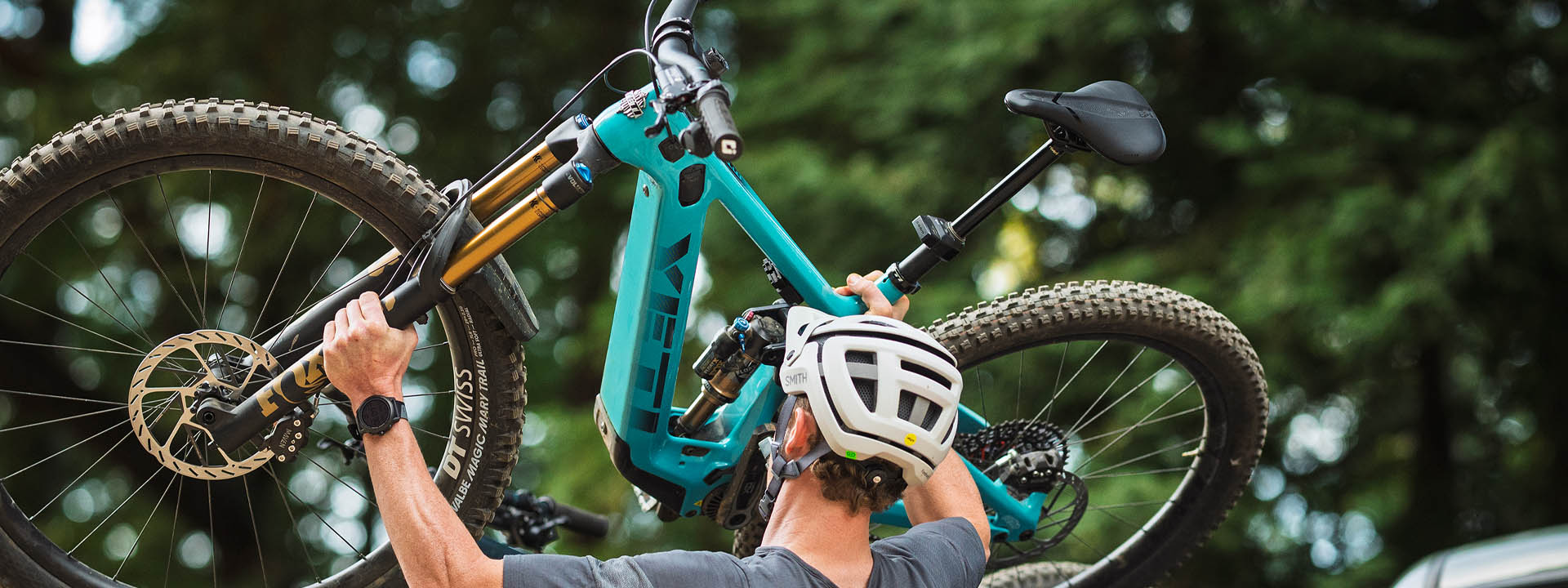
Air vs. Coil Shocks is arguably the most debated topic in mountain biking. We’re here to clarify things. Our choice? Both! We typically swap from air to coil when riding aggressive enduro and downhill.
Shop Related Products
There are two main types of shocks: air and coil. What’s right for you depends on your riding style and specific needs. Here’s all the information you need to make the right choice.
Air Shocks: Light and Adjustable
Air shocks use air pressure to lessen the force of bumps and vibrations. When you hit something, the shock compresses, squeezing the air inside to counteract the force. This provides a cushioning effect to smoothen out your ride.
One of the main advantages of an air shocks is they tend to get firmer the more they compresses (progressivity). Because of this, they won’t bottom out on really big hits and they’re more supportive near the end of their travel.
You can add or release air pressure to change how soft or firm the shock feels. That means you can adjust your suspension to match your weight and where/how you like to ride. Air shocks typically weigh less than coil shocks, making your bike lighter, more nimble, and easier to pedal.
On the downside, air shocks aren’t always as responsive to small vibrations. They’re more prone to heat build-up and more affected by dirt and debris, which changes how well they perform in certain temperatures, along with rain and mud.
They require a little more maintenance than coil. You have to clean the shocks every few trips or more often if you frequent really dirty or dusty areas. The air can seal has to be replaced every 50-100 hours of use or once a year, or as soon as it leaks. A full service, including a damper rebuild, is needed every 100-200 hours or 1-2 years.
Air shocks are great for cross-country, trail, and all-mountain riding because they can adapt to diverse landscapes. From flowy singletracks to technical climbs and drops. They’re also great for anyone who likes to quickly and easily fine-tune their suspension.
Coil Shocks: Plush and Consistent
Coil shocks rely on a metal spring to cushion trail blows. The spring compresses when you hit something to take in the energy, then releases it as the shock rebounds. Coil is super responsive to small bumps and choppy ground to give you plush and comfortable rides with better traction and control.
Another perk is coil shocks perform consistently at all times. They’re not affected by debris heat build-up and they can handle longer drops with no suspension fade. Plus, there are fewer parts and seals for you to maintain.
Unfortunately, coil shocks are usually heavier and more expensive than air shocks. They offer fewer options for fine-tuning. And you have replace the entire spring to change how soft or firm they are.
Cleaning is needed every few rides, like with air shocks. Lube the spring and seals every 25 hours to keep them running smoothly. Do a full strip-down service with a damper rebuild every 100-200 hours or every 1-2 years.
Overall, coil shocks are perfect for enduro, freeride, and downhill junkies who travel on technical terrain at breakneck speeds. They’re also good for heavier riders and those who like to splash through mud and muck since they don’t get hung up on debris.
Contact Airpark Bike Co with questions, quotes, or sizing on Air vs. Coil Shocks
We have a full stock of replacement parts from top brands. Buy from us to get the best performance on two wheels. You can also check out our selection of purchase and rental bikes from Niner, Yeti, Juliana, Nukeproof, and more. Visit our shop for riding gear from Fox Racing, POC Sports, and Smith Optics. Don’t wait—visit us today!