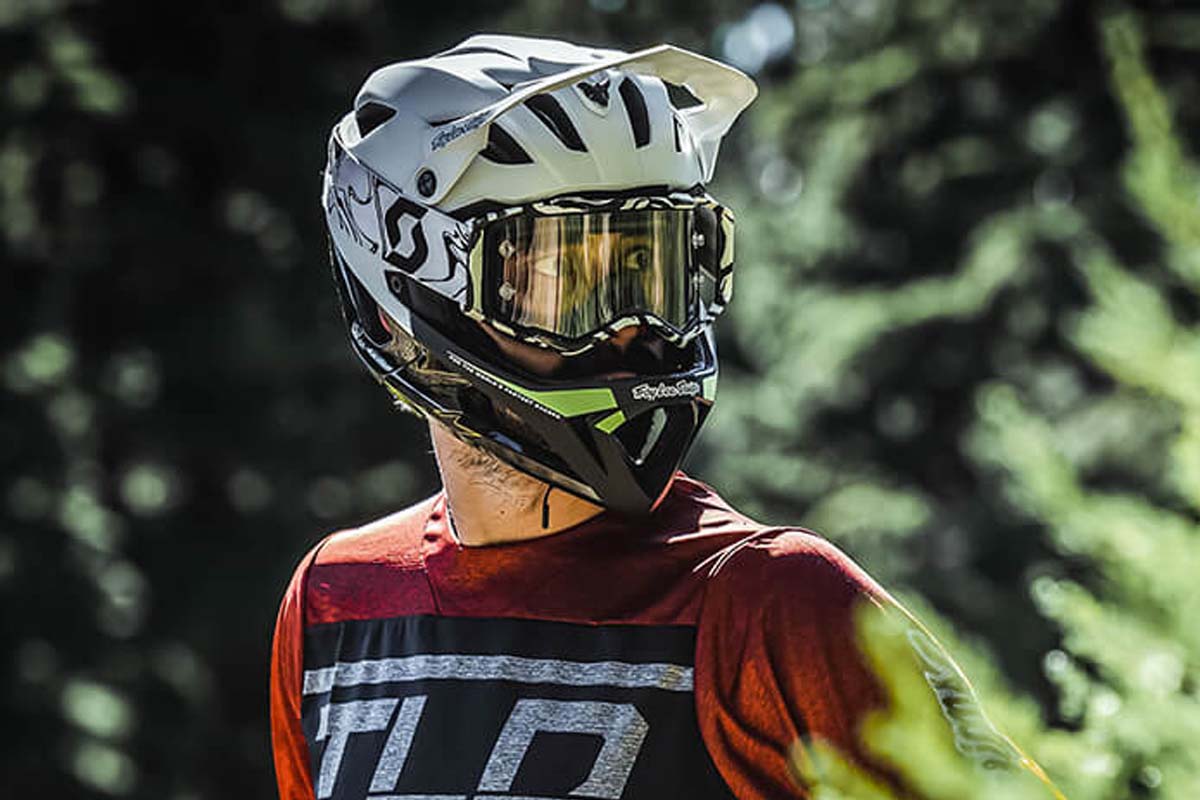
Mountain bike helmets and road bike helmets look similar at first glance, but they have some clear differences to meet the demands of the two types of cycling. We'll walk you through those differences and why you might want two separate helmets if you're a fan of both disciplines.
Shop Related Products
Coverage
Mountain bike helmets have a more robust design with extra coverage around the back and sides of your head. They protect you from obstacles, falls, and collisions while off-roading. While there are also vastly different styles of mountain biking helmets, for the most part they will all have greater protection on the back of the neck than road helmets. With a road bike crash, you're probably heading forward and landing on a flat surface, whereas mountain biking terrain usually has all kinds of trees, rocks, and branches that can impact at odd angles.
Downhill-focused full-face MTB helmets have chin bars that wrap around the chin and resemble motorcycle helmets. Full-face helmets are often used in enduro- and downhill-style riding.
Road bike helmets are sleeker and more aerodynamic, since that helps reduce air resistance and weight. High coverage is less of a priority, because riders are exposed to fewer obstacles and impacts. They typically cover from the forehead through to the back of the skull, and come down only slightly behind the ears.

Ventilation Level
Overall, MTB helmets have fewer and smaller vents than road helmets, because the extra coverage is top priority. Depending on the model, however mountain bike helmets can also have great air flow as some of them are designed for a cross country riding or riding in the heat.
Meanwhile, airflow is a key feature on most all road bike helmets and they have more vents that are either just larger, or are designed to funnel the airflow efficiently, to keep your head cool.
Visor or No Visor
Almost all mountain bike helmets have a visor to shield the rider's eyes from sun, rain, and trail debris. The visors can be fixed in place, but on higher-end helmets they will usually be adjustable so they can be moved up out of the way.
Most often, road bike helmets don't have a visor, although some have a small lip or overhang that's typically fixed in place.

Designed for Goggles vs Glasses
Anyone who's mountain biking with a helmet is typically also using goggles. MTB helmets take this into account, and are designed so that goggles will stay on without slipping. Road cyclists typically use aerodynamic cycling glasses or sunglasses instead so naturally the helmets don't have any particular designs to hold goggles straps in place.
Weight for Speed and Comfort
Lastly, mountain bike helmets are slightly heavier because of the extra protective features. The emphasis is on coverage and durability on rough and challenging terrain. Road bike helmets are lighter to prioritize speed and aerodynamics.
For example, Cycling Weekly's "Best Overall Pick" for a road bike helmet for 2025, the Giro Eclipse Spherical Helmet, weighs 270 grams in size medium. By comparison, Fox Racing's basic MTB helmet model, the Mainframe Trvrs Helmet, weighs in at 390 g, while their high-end full-frame Fox Racing Proframe RS model weighs 820 grams.
What About Crossover Helmets?
You can certainly use a road bike helmet when mountain biking and a vice versa if you want to. It might not be a perfect fit for the sport, but it's certainly better than nothing. There are also helmets out there that are specifically designed for people who want one helmet to use for different types of cycling. In addition, there are different types of helmets available for each discipline, including lightweight mountain biking helmets for cross-country riding that won't slow you down too much on a road ride, either. So it's not 100% cut-and-dried! However, for active cycling enthusiast rewards we certainly recommend making sure your helmet is well suited for the type of terrain you're riding.
In other words, if you're mountain biking, get a mountain biking specific helmet!